Showing posts with label Analysis. Show all posts

Tuesday, 1 March 2016

Glossary Terms for Analysis of Two Films -

Glossary - 

Media Franchise: a collection of media in which several derivative works have been produced from an original work of media.


Synergy: the interaction or cooperation of two or more organisations, such as conglomerates, to produce a combined effect greater than their individual effects.


Conglomerate: a conglomerate is a large company composed of smaller companies engaged in business especially within the media industry.


Cross Media Convergence: when multiple media formats join together on a project or to be owned by one individual or company.


Horizontal Integrated Institue: is the process of a company increasing production of goods or services at the same part of the supply chain.


Vertical Integrated Institute: an arrangement in which the supply chain of a company is owned by that company. Usually each member of the supply chain produces a different product or service and the products combine to fulfil a function.


Marketing: the action or business of promoting and selling products or services including market research and advertising.

Production: the making of the media product.

Distribution: the way in which media is distributed to the masses.

Exhibition: the way we view; getting the film to a paying audience.

The Big Six: the six main media companies that dominate the media production industry. (Sony, 20th Century, Warner Bros, Paramount, Universal, Walt Disney)

Ancillary Revenue: revenue that derives from goods and or services other than a companies primary product.

Sequelisation: the process of making sequels from an original media text. 

Star Wars (Lucasfilm LTD/ Walt Disney) and Ill Manors (BBC Films) Comparison -

Star Wars: The Force Awakens -

Production: Lucasfilm, Bad Robot, Truenorth productions

Distribution: Walt Disney Studios Motion Pictures (UK), Walt Disney Studios Motion Pictures (USA), Starz! (USA TV), Walt Disney Home Studios Entertainment (USA DVD)

Exhibition: Toronto International Film Festival

Budget: 200 Million USD

Revenue/ Box Office Returns: 6 Billion USD

Genre: Sci-fi

Target Audience: Young adults, Star Wars fans, BBFC 12

Independent/ Conglomerate: Conglomerate

Vertical/ Horizontal Integration: Horizontal

Ill Manors - 

Production: BBC Films , Film London Microwave, Aimimage, Plan B

Distribution: Revolver Entertainment

Exhibition: Toronto International Film Festival, Festival do Rio

Budget: 100 Thousand GBP (140 Thousand GBP)

Revenue/ Box Office Returns: 715 Thousand GBP (1 Million USD)

Genre: Crime, Drama

Target Audience: 15-25 despite the BBFC rating of 18+

Independent/ Conglomerate: Independent

Vertical/ Horizontal Integration: Vertical

Advantages for The Big Six - 

Production:
  • Can take risks when making films
  • Wont need to collaborate to receive funding
  • Can be more ambitious: celebrities, effects, locations
Distribution:
  • Size and power in the industry: more money and established links
  • Ue synergy to cross promote: video-games, music, toys

Case Study -


Investors: Ill Manors contact bank, Disney contact head of conglomerate.

Potential Risks: Level of audience, level of funding, will it become profitable, is it marketable.

Trailer: 17,000 tweets per minute when #TheForceAwakens trailer came out on ESPN, a Disney owned channel.

Success: It connected with the existing fan base, use of social networking e.g. trailers, caste to promote the film, Disney's vertically integrated structure enabling trailers to be released on ESPN at Superbowl, cross-marketing. 

Teaser Trailer: November 28th 2014
Teaser Trailer Two: April 16th 2015
Comic-Con: July 10th 2015
Official Trailer: 19th October 2015
Star Wars Battlefront: 8th December 2015
Film Release: 18th December 2015
Trailer: 130 million views in one weekend of the final trailer release

Facts: 69% of young adults watch trailers before deciding to watch a film.

Annie Leibovitz photographed Star Wars for Vanity Faire promotion.

Ancilliary Products: Disney Infinity 3.0 and Battlefront estimated to make $1.28 billion.

Star Wars also had a range of makeup with Mac cosmetics.

Target Audience: 15% of the audience was between the age of 13 and 17, tickets purchased most by males aged 18-49 with an average of 34.

Box Office: $7.3 (billion)
Home Entertainment Sales: $5.749 (billion)
Toys and Merchandise: $17 (billion)
Video Games: $4.280 (Billion)
Intellectual Property: $4 (billion)
Miscellaneous: $3.65 (billion)
Total: $41.979 (billion)

Disney bought out Lucasfilm ltd for $4.05 billion. 

Tuesday, 2 February 2016

'A Touch Of Frost' Disability Analysis Essay Preperation -

Disability - 
https://www.youtube.com/watch?v=1C6thBrPD6g

Camera:
  • Panning shot as the police chase after 'Billy'

Editing:
  • Jump cuts which contrast between the disabled and the 'fully able' officer/ parents

Sound:
  • The crescendo music during the police chase of 'Billy'

Mise-en-scene:
  • "Mentally subnormal" (Police officer about 'Billy')
  • "Handicapped" (Parents about 'Billy')
  • Mother was going to 'clean him up' 
  • Billy: 'I was frightened' by the police
  • The officer asked the father rather than the disabled character 'Billy' 
  • 'Billy' is disabled due to his down syndrome
  • The lighting is darker on 'Billy' to make him appear more suspicious and 'dimmer' mentally
  • People are patronising towards him, speak like a child

Tuesday, 26 January 2016

Eastenders Analysis Regional Identity and Ethnicity Representations Essay -

Eastenders -  https://www.youtube.com/watch?v=heA414lv6gc

Camera:
  • Medium shot
  • Medium three shot
  • Close-up on phone


Editing:
  • Jump/ straight cuts
  • Cut in on the phone


Mise-en-scene:
  • Matriarchal family figures: Cora, Zainab, Sharon and Carol
  • Zainab states that the damage of property could be considered a hate crime against Muslims
  • Zainab refers to the young people of London as 'hoodlums'
  • Carol assumes that Zainab lives in a council house
  • Zainab is regional manager of the area
  • The application of an Asian family to own the local corner store (stereotype)

Sound:
  • East London accents
  • Pakistani accents


Other:
  • Setting: East London
  • Racial Groups: London, Pakistani
  • Stereotypes: Council houses due to low income of the region

Essay -

How are regional identity and ethnicity presented in the media text 'Eastenders'?

The media text 'Eastenders' depicts multiple theories and social groups within the episode stated above.

To begin with, the establishing shot demonstrates the setting as East London, a significant culturally diverse population, which is also represented in the cast of the TV soap. Social, racial and regional groups are all displayed within the programme. For instance, mise-en-scene is important in indicating both regional and racial identity in the episode through the use of matriarchal family structures. Possibly the most significant matriarch is Zainab Masood. The character of Zainab Masood is from Pakistani heritage in which the cultural norm is for the females to be dictated by their male counterparts such as fathers, brothers and husbands. Zainab Masood is therefore flouting the ideologies of her ethnicity, despite her role as matriarch still being domestic, whilst conforming more to the regional identity of the powerful working businesswoman in modern London.

Furthermore, sound also plays a large role in exemplifying ethnicity and regional identity through the use of accent, dialect and socialect within dialogue in the text. Accent is the sound of pronunciation influenced by ethnicity and regional identity whilst sociolect is language used by social groups and finally dialect is language used by certain regions and subcultures. For example, accent introduces the ephemeral regional identity and ethnicity that is present due to the contrasting variety of accents including those of East London and Pakistani.

Also, the mise-en-scene in the development of plot helps to exaggerate ethnicity within the media production. The ethnic stereotype that Asian families run local shops is supported by the secondary plot of the Masood's applying for ownership of the 'Minute Mart'. Thus, this develops stereotypical ideal in the representation of ethnicities and regional identity within East London.

Additionally, another example of regional identity is the feature of production, mise-en-scene. A stereotype associated with the regional area of East London is the much stigmatised idea that residents all occupy council housing. An example of this from within the episode is when the character of Carol assumes that Zainab lives in a council house to which the response is far from satisfied. As a result, the ideas that council housing is a negative stereotype within London is supported by the episode through the use of character and dialogue.

Finally, regional identity is further represented through dialogue and character in the media production 'Eastenders'. The idea that the East London region is full of young people who all misbehave and belong to delinquent youth anti-society subcultures, relating to Cohen's theory on youth subculture representation within media being over presented, is shown through Zainab referring to the character of Lauren as a 'hoodlum' resulting from the party culture held by the character. This is a regional identity based stereotype about London which is supported due to the norms and values held by the producer which is then imparted to the receiver therefore enforcing hegemony.

To conclude, regional identity and ethnicity displayed in the episode of 'Eastenders' could easily be interpreted as biased and influenced by the ideals held by the producer rather than being a more representative example of the reality within an East London region and the depiction of specific ethnicities.

Regional Dialect in Doc Martin Essay -

Discuss the Representation of Regional Identity in the Clip Doc Martin - 

In the clip Doc Martin there is a strong reference to regional identity through the depiction of the Cornish and the contrasting Londoner Doc Martin himself. Regional is displayed through the four main roles within production and these are: camera, sound, editing and mise-en-scene. 

To begin with, camera techniques are used to display regional identity through implication and connotation. For instance, a low angle camera shot is used when setting the scene of Doc Martin's general practice; this is relevant as the low angle shot is focused on a young Cornish plumber in blue overalls. The connotation of a low camera angle is that the person within the frame of the scene is shown to be of lower class or displayed as inferior to the others. Dyer (1979) states that stereotypes are all about power, those with power stereotype those without it and as a result Doc Martin forms stereotypes about the local Cornish people. Doc Martin, as a qualified doctor and from a region of more wealth and status, is displayed as middle class through mid body shots rather than low angle shots portraying the working class status of the Cornish plumber. This reinforces the idea of social hierarchy with the people from a middle class background being educated and in a skilled professional position of power whilst the people from the working class background are presented as uneducated manual labourers. Furthermore, the panning shot following the two characters down the small town high street depicts the regional identity of living in a rural Cornish area. The scenery shown is small unique shops with the cliffs of the coast nearby, this depicts the quaint relaxed lifestyle of the villagers in the extremely southern region of the United Kingdom. The speed of the panning shots was also relevant as the panning shot was slow which reflected the slow lives lived by the inhabitants of the rural area and this depicted the two characters, of which one was a foil, stressing the differences between the calm and somewhat slow Cornish people and the fast paced stressed Londoner Doc Martin. 

Secondly, sound and accent are also significant in depicting regional identity in the media text Doc Martin. The most obvious example of sound is accent and dialect employed by the characters. For example, the dialect synonym for someone who is in a state of declining mental health is referred to as "going Bodmin" which is a local moor that people tend to walk towards when going mad. Additionally, the use of music in the production is implicitly linked to regional identity due to the pace, tempo and tone. For instance, the music was comical and of a slow pace therefore in keeping with assumptions of the west country people as country 'bumpkins' with a slow mentality and lack of education but this is only a stereotype.

Furthermore, editing also plays a role in showing regional identity through the use of jump cuts. Jump cuts would normally be linked to a fast pace but in the context of this media production it is used to show the stark contrast between the middle class Londoner, Doc Martin, and the working class Cornishmen. For instance, at the beginning of the clip there is a quick succession of jump cuts when the water main bursts and this cuts between the face of Doc Martin and the faces of the plumbers. This particular scene is not only an example of regional identity but also of class divide. Doc Martin is a middle class Londoner who is out of place against the working class Cornishmen but still holds a position of superiority over them despite his status as an outsider. The theorist Gramsci discussed hegemony from a marxist perspective which suggested that media reinforced capitalist ideals through the depiction of regional identity and class divide. Hegemony is when the norms and values of the higher classes are imparted onto the working classes forcing them to adhere to their social position. The jump cuts placed Doc Martin in the position of power over the others reinforcing the ideas that regional and stereotypically working class areas are still controlled by a patriarchal figure representing the hierarchical structure of inequality due to region and class within society.

Finally, mise-en-scene which can be argued as the most important factor in media productions is another way of demonstrating regional identity in the text Doc Martin. The stereotypes of the rural Cornish regional area are reinforced through the muse-en-scene of setting, character, props and costume. For instance, the setting of the village is depicted as a small place in which everyone knows everyone else; the elderly lady moving cabbages, who requested Doc Martins' help, tells him the name of the women who he had previously met and was looking at. Furthermore, the plumbers were a small village family business, a father and son team, working in a manual labour trade representative of the regional working class areas due to lack of a high class education; this is further supported through Doc Martin suggesting that the older plumber should get a mop and learn how to use it when the water main burst. Additionally, the costume of the blue boiler suit worn by the two plumbers implies a working class, blue collar, trade. The blue boiler suit costume further supports the connotation of the blue collar working class whilst Doc Martin was wearing a white shirt that represents the white collar middle to upper classes further reinforcing the idea of regional identity being strongly related to the class divides.

Therefore, regional identity can be displayed through the variety of production means of camera, sound, editing and miss-en-scene in the media text Doc Martin. Not only is regional identity represented in the clip but so is the class divide and hegemony and as a result some theorists can be applied to the text as well; this relates to the theorists Branston and Stafford (2001) who state that soaps rely on archetypal characters and stereotypes that are readily accessible to entertain families and communities. As a result, the show can be perceived in either way as biased or non-biased. Some audiences would believe the media programme to be biased as Doc Martin is perceived as more intelligent and of a higher class than the Cornish people who are presented as un-educated farm workers who live in a small village.

Extension/ Improvement Paragraphs - 

Additionally, regional identity is presented through make-up, or lack thereof, in the media text Doc Martin. Very few, if any, of the characters, stereotypically females, wear make-up. Within society it is perceived that make-up is usually worn by young women and in rural areas the stereotype is that the elderly and retired live there; therefore the lack of make-up is representative of an ageing population which is a stereotype associated with rural regions such as Cornwall. Also, the females presented in the media text are depicted as manual labourers who would not need to wear make-up in their everyday life especially compared to someone who is from Doc Martin's region of London where appearance is vital is certain workplaces.

Moreover, props are also significant in representing regional identity for instance through the use of the vegetable cart prop. A member of the village who Doc Martin stops to speak to is emptying a cart of cabbages and delivering them to local businesses. This displays regional identity as it implies the farming lifestyle of the rural Cornish people and that all businesses are small local businesses that work in cohesion with local farmers to keep the urban lifestyle away from their village.


Regional Dialect In Doc Martin Analysis -

Doc Martin -

Editing:
  • Jump cuts to show the stark difference between the Londoner and the Cornish/ Devonshire people
Sound:
  • The accents of characters
  • 'Bodmin' meaning crazy
  • Calling an adult 'boy' 
  • Comical slow yet upbeat music supports the idea of country 'bumpkins'
Camera:
  • Low angle camera shot shows the lower class status
  • Panning shot following them down the small town high-street in the cliff tops
Mise-en-scene:
  •  They don't use nouns
  • Cornish/ Devonshire people are uneducated
  • The Cornish man is lazy
  • The southerner is out of place
  • Small town where everyone knows everyone
  • Family businesses
  • Doc Martin suggests that the northerners don't even know how to use a mop
  • Blue jumpsuits for working class (blue collar workers) plumbers family business
  • Vegetable cart prop
How to Identify Regional Identity - 
  • Setting
  • Accent
  • Dialogue
  • Props
  • Makeup
  • Class of characters
  • Costumes

Tuesday, 5 January 2016

Luther Crime Drama Narrative Theory Analysis -

Propp:
  • Anti-hero: DCI John Luther (a hero who acts in occasional immoral ways)
  • The Helper: George Cornelius (a crime boss who helps Luther solve part of a case)
  • The Helper: DS Emma Lane (a police officer who works with Luther)
  • Villain: Steven Rose (a serial killer known for his cannibalism)
  • The Dispatcher: Megan the 'clairvoyant' (provides the message from 'Alice' to Luther)

Straus:

  • Binary opposites of good and evil
  • The opposites of the police and the criminals
  • Opposites between the anti-hero DCI Luther and the villain of each episode, for example the criminal, in this case Steven Rose.
  • Conflicting opposites in Luther's mind between morality and action governed by violation of his position as a police officer.

Barthes:

  • The crime drama is open and able to unravel in a variety of different ways.
  • Enigma code: who killed Alice Morgan, where were the diamonds hidden, what made the murderer the way he is, why did the murderer kill those specific people, why did the murderer eat specific parts of each victim.
  • Action code: the murderer killing the first victim leading to the investigation and the death of the cannibal killer, Luther coming back onto the scene after Alice's death, Luther kidnapping the crime boss which leads to him being targeted by hitmen.  
  • Semantic code: blood connoting death and the dismembering of bodies, the sudden death of the pigeon which the first murder victim mistakes for an intruder. 


Roland Barthes Narrative Theory and Criminal Programme Analysis -

Barthes Narrative Theory:

Semiology - study of signs

Open or Closed story
Open = Lots of ways to unravel
Closed = Only one way to unravel

1. Enigma Code
2. Action Code
3. Semantic Code
4. Symbolic Code
5. Referential / Cultural Code

Enigma Code -
The audience do not fully know what is happening until the final scene when all loose ends are tied up.

Action Code -
Any action that implies a further narrative action.

Semantic Code -
Connotation within the story that gives additional information more than the basic denotation.

Symbolic Code -
An array of semantic code; multiple symbols with their meanings standing for something larger.

Cultural Code-
Anything that cannot be challenged and is assumed to be the truth.

Luther Analysis: 

Camera:
Pan shot round the character Luther standing on the edge of a building
Over the head tilt
Extreme close-up on Luther's face
Close-up on the food being scanned at the checkout could foreshadow the eating of the organs of the murder victims
Over the shoulder shot whilst the female sits with the murderer in the background
Long shot as the police officer Theo heads towards the fridge which he believes to be containing the head and hands of a murder victim but instead it explodes

Mise-en-scene:
Creepy doll in the corner of the house with the alone female
The pigeon which the female thought to be an intruder died suddenly (foreshadowing)

Sound:
The scream as the female is stabbed and presumably murdered by the intruder
The music suddenly gets loud as the assumed murderer stands sinisterly
The music as Luther walks into the pub is loud and then suddenly stops and begins again
The edited creepy nursery rhyme music to create tensions and fear in the audience

Editing:
Quick cuts between scenes


Wednesday, 30 December 2015

Theoretical Representations and Approaches to Youth in 'Quadrophenia' Essay -


Theoretical Approaches to Representations of Youth in Media –

Having viewed the film ‘Quadrophenia’ prepare a 700 word essay. Using theories, theorists and textual analysis:

·         Explain, using your opinion, whether the youth representations are fair, biased or balanced.

·         Identify, at minimum, three theories that can be applied to the film and discuss why they can be.

·         Apply terminology.

The media production ‘Quadrophenia’ can be analysed as it depicts youth subcultures in a variety of ways. ‘Quadrophenia’ is set in the 1960s when the Mods and Rockers subculture was rife within society. Theoretical analysis can be applied to some components of production such as mise-en-scene, camera, editing and sound. A main idea that should be explained is hegemony; hegemony is the ideology and norms/ values of the dominant and superior group within society being passed onto the more inferior groups.

To begin with, the first theorist that can be applied to ‘Quadrophenia’ is Dick Hebdige. Hebdige, whilst studying youth subcultures, stated that youth groups resist hegemony through a sense of identity achieved, for example, through style. This is exemplified in the media text ‘Quadrophenia’ through the depiction of the youth subcultures of the 1960s known as the Mods and Rockers. Each youth group has a specific sense of identity achieved through clothing, music and vehicles. The Mods wore smart suits with green parker coats, rode scooters such as Lambretta’s or Vespa’s and listened to music that fuelled a dance craze culture. The Rockers on the other hand wore leather biker jackets, rode motorbikes and listened to rock ‘n’ roll music. The two youth subcultures, specifically the Mods, shown in ‘Quadrophenia’ resisted hegemony, the ideals of the bourgeoisie, instead favouring creating their own subcultures in which activities such as taking drugs, partying, damaging public property and fighting were all viewed as socially acceptable. Hebdige also says that youth groups are seen either as fun or troublesome; for instance other youths would stereotypically view the rebellious behaviour as fun whilst the wider culture, the dominant culture, of the time period would perceive the nature of youth subcultures to be troublesome. This is made evident when the Mods and Rockers fought on the beaches of Brighton in the film and the behaviour was passed off as natural by other youths whilst the adults, especially the character Jimmy’s mother, says how she is disappointed and angry about her sons dangerous and rebellious behaviour.

Furthermore, another theorist who can be applied to the representations of youth in ‘Quadrophenia’ is Ann Gould. Gould whilst studying youth behaviour, stereotypes and stigmatised labels associated with youths discovered that there were six key categories which all youths could be divided into.  The six stereotypical categories were: rebellious, artificial tribe, sexual, nihilistic, violent and self-destructive. The main character in ‘Quadrophenia’, Jimmy, can be placed into a multitude, if not all, of these categories. The characters in the media text are rebellious in that they are not only refusing to conform but directly going against the norms and values of wider society, relate themselves to an artificial family tribe in their Mod or Rocker youth subculture, are sexual with one another at parties or even in alley ways, nihilistic as they reject the hegemonic morals of the bourgeoisie, are violent in their persistent fighting between the almost gang culture of the Mods and Rockers and finally are self-destructive in their drug taking, fast driving and overall fast lifestyle. There is one definite instance in the film, at the end, in which the character Jimmy steals a scooter from another Mod and proceeds to drive it along a cliff top before sending it over the edge whilst to an audience it is ambiguous as to whether the character has committed suicide or not.

Finally, the last theorist to be applied to the film ‘Quadrophenia’ is Stan Cohen. Cohen exactly focused on the representations of youth in the context of Mods and Rockers for a period in his research into youth. Cohen said that media coverage of youth was reported in at least one if not all of the following ways: exaggeration and distortion, prediction and symbolisation. Youth subcultures were presented as folk devils, those who are bad for society, which lead to deviancy amplification of any negative events involving the youth subcultures causing moral panic amongst wider society. In the film ‘Quadrophenia’ the youth subcultures are presented both in a neutral and negative light as the film has elements of non-fiction tied in amongst the fictional character of Jimmy.

In conclusion, I believe that whilst it is difficult to decide whether the representations of youth are fair, biased or equal in ‘Quadrophenia’ as it is set in the 1960s as a historical media text I would say that despite stereotypical behaviour of youths is shown it does fairly represent at least some of the young generation although I would say that no media text could ever summate a whole group within society ,specifically youth, as there will always be anomalies.

Approaches to Youth in Quadrophenia -

Theoretical Approaches to Representations of Youth - 

Gramsci:
Coined the term hegemony which means the higher in status imparting their norms and values on those of lower status than them.

Hebdige:
Studied youth subcultures and how subcultures resist hegemony through style.
Media representation of youths are either as fun or troublesome. 

Acland:
Effects of media representation of delinquent youth.
Media representations of anti-social youth reinforces hegemony. 
Developed the concept of the ideology protection. 
Cultivation theory meaning the repetitive nature of media, specifically television, influences interpretation of people and the world. 

Gould:
  • Rebellious
  • Artificial tribe
  • Sexual
  • Nihilistic (rejection of religious/ moral principles, life is meaningless)
  • Violent
  • Self-destructive 
Cohen and Wilkins:
Moral Panic is fear in the public over a specific subculture.
Media representations of youth reinforce hegemony.
Deviancy Amplification spiral leads to moral panic through media reporting. 
Folk Devils are interpreted as a threat to the norms and values of wider society.

1. Exaggeration and distortion: Numbers, damage caused, violence etc.
2. Predicition: Further conflict and violence is assumed.
3. Symbolisation: Symbols of the youth subcultures associated and labelled to violence.

Grebner:
Grebner comments on 'The Cultivation Theory' and states that the more time someone spends 'living' in the television world the more likely they are to be influenced and take as reality what they witness.

Giroux:
Representations of youth are empty, they only reflect adult concerns.
Media representations of youth is not equal to the reality of youth identity.

Althusser:
Discusses the 'Ideological State Apparatus'.
The dominant ideology within society is reinforced through different groups including the media.

Notes on 'Quadrophenia':

Camera:
Pan shot on the motorbikes
Pan shot circling the attendants of the party

Editing:
Quick cuts between scenes

Sound:
Dialogue obscenities and vulgarisms such as "fuck off"

Mise-en-scene: 
Drug dealing
Partying
Gambling
Sexual behaviour between youths
Damage of property
Youth subcultures of Mods and Rockers
Fighting
Self-destructive almost commits suicide


Sunday, 13 December 2015

Contemporary Media Texts and Gender Theory Influences Essay -

Media Gender Representation Essay -

To what extent do Mulvey’s theory (1975) on the male gaze and Shroeder’s ideas (1998) influence contemporary media texts? Discuss Charlie’s Angels and one other show giving evidence from mise-en-scene, sound etc.

Mulvey’s (1975) theory on ‘The Male Gaze’ studies how women are shown in media as sexual objects for heterosexual male gratification ; this is depicted through a variety of means such as camera shots, sexual objectification within dialogue and the conformity to stereotypes of genders in media. Schroeder’s (1998) ideas suggest that the both ‘The Male Gaze’ and ‘The Female Gaze’ suggest more than Mulvey considered. Schroeder stated that “to gaze implies more than to look at – it signifies a psychological relationship of power, in which the gazer is superior to the object of the gaze”. Both theorists put forward an argument that suggests ideas of gender are presented in media productions through a gaze. The two forms of media that I will be discussing, in relation to a few theorists who discuss gender, are ‘Charlie’s Angels : Full Throttle’ and ‘Game of Thrones’ despite them being different mediums.

To begin with, the trailer for ‘Charlie’s Angels’ both conforms and subverts Mulvey’s theory on ‘The Male Gaze’ whilst supporting Schroeder’s ideas of power and introducing the theories of Hanson’s ‘The Female Gaze’. For instance, in the trailer at 0:30 an older male is shown staring at one of ‘Charlie’s Angels’ who is dancing supposedly to distract the male or to gain information. As a result it can be said that the female protagonist is being sexualised by the male character, and heterosexual male members of an audience, thus conforming to Mulvey’s theory. However, the female character is also staring back at the male whilst standing over him thus establishing dominance and conforming to the ideas of power suggested by Schroeder through the use of a gaze and levels in body language and movement. Despite this, it could be argued that the female protagonists of the film use their bodies, as they are aware of the male gaze, to their advantage therefore turning the sexualisation into a weapon to use against males. Furthermore, at 0:35 two of ‘Charlie’s Angels’ are shown looking at a male character through binoculars and saying “Yummy…”. This is an example of Hanson’s ‘The Female Gaze’ which has become more common in contemporary media. ‘The Female Gaze’ is when females sexualise males and therefore this subverts Mulvey’s ideas that media portray women as weak and objects of male sexual lust and desire. Additionally, this moment in the trailer also suggests, according to Schroeder, that the female protagonists are more powerful than their male counterparts. Also, at 1:24 the three ‘Angels’ are with a friend who says “You all fine, but you crazy” whilst gazing at them from a physically higher position. Therefore, the use of ‘The Male Gaze’ and dialogue displays the female active protagonists as inferior to the male who views them sexually but also uses the stereotypical lexis of “crazy” associated with females. Consequently, it can be argued that the trailer for the film ‘Charlie’s Angles : Full Throttle’ is influenced by a variety of gender theorists including Mulvey, Hanson and Schroeder either to create comical effect and or to challenge stereotypical gender roles and representations within the media.

On the other hand is ‘Game of Thrones’ which, very similarly to ‘Charlie’s Angels’, in its series 1 trailer has examples of Mulvey’s ‘The Male Gaze’, Schroeder’s theory on ‘The Gaze and Power’ and Hanson’s theory of ‘The Female Gaze’. For example, at 0:43 Schroeder’s theory on the gaze and power is exemplified when the character ‘Lord Eddard Stark’ gazes down at his wife whilst telling her that he must leave her and their home. The combination of the use of levels, the gaze and dialogue all merge to show the male character as more powerful than his wife. Although, the ‘Game of Thrones’ trailer also conforms to Mulvey’s theory of ‘The Male Gaze’ at multiple points in the footage. For instance, at 1.20 the horse-lord ‘Khal Drogo’ gazes at the female character of ‘Daenerys Targaryen’. This is an example of ‘The Male Gaze’ as the female character is promised to the male character despite her disagreement and is being stared at by the male character who is far higher whilst seated on a horse. The male character sexualises the female character by staring at her body from above and this is also an example of Schroeder’s theory showing the male character as far superior to the female, who is subject of the gaze. Furthermore, at 1.34 is a scene which takes place in a brothel which provides examples of both Mulvey’s ‘The Male Gaze’ and Hanson’s ‘The Female Gaze’. For example, The female is a prostitute being used by the master of the brothel to entice a male guard in. The male guard is seen to be gazing at the body of the semi-clothed female thus establishing the idea that she is a sexual object who exits only for male lust which conforms to ‘The Male Gaze’. However, it is interesting that the female prostitute exemplifies ‘The Female Gaze’ whilst staring at the male guard; even though this would usually be described as an example of ‘The Female Gaze’ it could be argued that her staring does not sexualise the male but instead invites him to sexualise her which would again then become an example of ‘The Male Gaze’.

To conclude, whilst different mediums of media are influenced by many different ideas and theories it can be argued that a significant amount of contemporary media platforms are influenced by Mulvey, Schroeder and even Hanson whether they conform to the theories or subvert them.


Friday, 11 December 2015

Gender Representation Laura Mulvey's The Male Gaze and Miriam Hansons The Female Gaze -

Gender - 

Objectification : When someone is treated as an object who can be owned or possessed by another.

Voyeurism : A perversion in which a person receives sexual gratification from seeing sexual images.

Archetype : Someone whose appearance and behaviour match a stereotype.

Stereotype : A label attached to someone based upon a social factor such as gender, class, ethnicity, culture, religion etc.

Hegemony :  Dominance of one state over another social group e.g. men over women.

Laura Mulvey's The Male Gaze (1975) :
1. How men look at women
2. How women look at themselves
3. How women look at other women

Visual Pleasure and Narrative Cinema :
  • Women are presented as a sexual spectacle as objects of pleasure for the characters and audience. 
  • Audiences experience film through the view of a heterosexual male.
  • Women are always starting from an 'unequal' beginning.
  • The camera present women as sexualised for men's pleasure.
  • Men fetishise women which is referred to as 'fetishitistic scopophilia'. 
  • Men have this gaze to avoid being 'castrated'.
Features of the Male Gaze :
  • The camera lingers on the curves of female bodies and women are presented in the context of mens reactions to the events. 
  • Women are relegated to the status of an object. 
  • Female viewers experience film narratives secondarily by identification with the male.
Male Gaze in Advertising :
  • Theorists have also noted that the female body is often used in advertising even when it has nothing to do with the product being advertised.
Jonathan Schroeder (1998) :

  • "to gaze implies more than to look at - it signifies a psychological relationship of power, in which the gazer is superior the object of the gaze".
Criticisms of Mulvey and The Male Gaze Theory :
  • Some women enjoy being looked at such as beauty pageant contestants.
  • The gaze is not always used sexually but also to compare body image or clothing etc.
  • The theory does not consider female spectators, only heterosexual males.
  • Since the 1980s there has been a large increase in the sexualisation of the male body. 

Charlie's Angels Gender Representations :

Empowerment:
1. Riding a motorbike
2. Owning a Ferrari 
3. Using sexuality as a power mechanism
4. Saving men
5. Fighting men
6. Adrenaline sports
7. Driving a monster truck
8. The women are in an active protagonist role

Sexuality:
1. Promiscuous/ impractical outfits
2. Surfboard innuendoes
3. They have a male boss
4. Strippers pole and stripping

Miriam Hanson's The Female Gaze 1984 :

  • A theory that suggests women are also able to sexualise males as erotic objects of desire.
  • Since the 1980s there has been a large increase in the sexualisation of the male body.


Wednesday, 25 November 2015

Diegetic and Non-Diegetic Sound -

Sound - 

Star Wars : The Force Awakens - https://www.youtube.com/watch?v=sGbxmsDFVnE
  • 0.08 Non-diegetic Sound - Music (Piano) : draws viewers attention into the video.
  • 0.18 Non-diegetic Sound - Voiceover : narrative introduces the characters to the audience.

  • 0.23 Non-diegetic Sound - Voiceover : an alternate narrator gives insight into another character.
  • 0.38 Non-diegetic Sound - Voiceover : A third narrator is introduced who is on screen but the voice is non-diegetic meaning that an audience can assume that it is the on screen characters thoughts.
  • 0.56 Diegetic Sound - Voiceover : A character appears to be talking to the audience however they are actually addressing another character as breaking the fourth wall is not often used in the Star Wars franchise.

  • 1.07 Non-diegetic Sound - Music : adds to the pace and tempo of the trailer which creates excitement for the audience.
  • 1.16 Diegetic Sound - Diegetic narration merges with the previous non-diegetic narration to show the audience the characters on screen in relation to the information that we have already learnt. 
  • 1.17 Non-diegetic Sound - The sound of hyper drive is used as a special effect for the on-screen Millennium Falcon.

  • 1.21 Non-diegetic Sound - Music and Voiceover : Trailer sound track and narration is used over a montage of scenes to evoke an emotional response in the audience but also to build up to the date of release.
Lord of The Rings : The Fellowship of The Ring - https://www.youtube.com/watch?v=BhjDnrw34QA

  • 0.28 Non-diegetic Sound - Music/ Singing: creates a fantasy atmosphere with the voices singing almost magically. 
  • 0.36 Non-diegetic Sound - Narration/ Voiceover: A female voice begins to introduce what the trailer, and ultimately the film, will show. The words are spoken both in english and in another language possibly elvish which adds to the fantasy nature of the film. 
  • 1.02 Non-diegetic Sound - Music: the music used is the opening music featured in the 'Lord Of The Rings' films which is placed over the footage of the emerging title. 

  • 1.08 Diegetic Sound - The sound of a roaring fire used to forge a ring as shown in the parallel footage. 

  • 1.10 Non-diegetic Sound - Narration/ Voiceover: a female voice is used to explain to the audience what is being shown in the trailer.

  • 1.52 Non-diegetic Sound - Music: very dramatic war drum music is played to create an atmosphere that evokes a sense of fear in the audience. 
  • 1.54 Diegetic Sound - The sound of a fire/ volcano erupting when referring to the fires of Mount Doom.

  • 1.57 Diegetic Sound - The sound of the fires of Sauron's domain. 

  • 2.00 Non-diegetic Sound - Music: The war drums beating in the background whilst the female voice continues to narrate the story of Sauron's ring.  

  • 2.19 Diegetic Sound - Screams: The people shown in the footage are screaming as they are being attacked by Sauron's army. 

  • 2.26 Non-diegteic Sound - Music: There is music used playing over the dramatic scenes of an elvish army marching to war against Sauron and his soldiers. 

  • 2.35 Diegetic Sound - The fires of Mount Doom rumbling which adds to the tense atmosphere of the battle scenes in the trailer. 
  • 2.37 Diegetic Sound - The noises of the orcs readying for battle. 

  • 2.39 Diegetic Sound - The sounds of the bows being fired on the battlefield. 

  • 2.44 Non-diegetic Sound - Music: The dramatic music over the scenes of the battlefield.
  • 2.50 Diegetic Sound - The commands from the elven Lord of Rivendell, Elrond, are shouted out loud on the battlefield. 

  • 2.58 Non-diegetic Sound - Music: The loud music is played over the footage of the battlefield to create atmosphere. 
  • 3.03 Diegetic Sound - The sounds of the fighting on the battlefield.
  • 3.06 Non-diegetic Sound - Narration/ voiceover: The female elven voice begins to speak again over the dramatic scenes of the battle. 
  • 3.34 Diegetic Sound - The screams of the men begin killed by Sauron on the battlefield. 


Tuesday, 24 November 2015

Textual Analysis Mock Revision -

Mise en scene:
  • Rebellious teenager
  • Vulgarisms used by teenagers
  • Obsessive parents
  • Relationships between family (specifically teenagers and their parents)
  • Stereotypical teenagers
  • The mothers from both families were at home when the children were
  • Matriarchal family structure

Camera:
  • Establishing shot of the posh house
  • Over the shoulder shot when mother and daughter discuss
  • Pan following the entrance of a character to the room
  • Zoom shot as the boy enters the house in the more working class family
  • Shot reverse shot between arguing mother and daughter
  • Zoom out as the daughter runs up the stairs away from her mother
  • Cut shot between the mother, father and daughter at the dinner table
  • Conforming to the line of the 180 degree rule when the mother and father are left at the dinner table

Sound:
  • Dialogue between characters
  • Diegetic dialogue


Editing: 
  • Cut between shots
  • Cut between scenes

Overall Representation:
  • That the young people are rebellious
  • Teenagers are lazy
  • Teenagers rely on their parents funding
  • Teenagers have no respect
  • Young male from working class family has to get a job to help support his family
  • Young female from upper middle class family is being funded and can afford to go to university
  • Mother (especially upper middle class) strict, different morals, snobbish, vindictive 

Tuesday, 17 November 2015

Todorov's Theory Maleficent Analysis -

Todorov's Theory - 

1. Equilibrium - The Kingdoms living in peace. Young Maleficent has her wings and is happily in love with a young Prince of the neighbouring Kingdom. ( https://www.youtube.com/watch?v=pzYLGiIV5fk = 0.55 )


2. Disruption of the Equilibrium - The Prince stealing Maleficent's wings because The King wanted her dead due to her excessive power. Maleficent cursing the King's newborn child to fall into a death like sleep at the prick of a finger on the evening of her 16th birthday.                                                       ( https://www.youtube.com/watch?v=w-XO4XiRop0 = 0.30 )


3. Recognition of the Disruption - Maleficent realises that the child, Aurora, is innocent and that she does not deserve the encroaching curse. ( https://www.youtube.com/watch?v=w-XO4XiRop0 = 0.48 )


4. Solving of the Damage - Maleficent attempts to repair the damage done by trying to reverse the curse that she placed upon Aurora. ( https://www.youtube.com/watch?v=quX3HPOddDA = 0.33 )


5. New Equilibrium - The Kingdom living in peace once again as Aurora is awoken from her somber by true loves kiss.  (https://www.youtube.com/watch?v=qDD24F19yJU = 2.58 )


Anti-hero: Maleficent

Antagonist: Prince Stephan

Anti-hero Traits: 
  • Experienced a tough early life
  • Acts impulsively without thought of consequences
  • Changes her position from bad to good


Captain Philips Analysis Narrative Theory -

Narrative Theory -

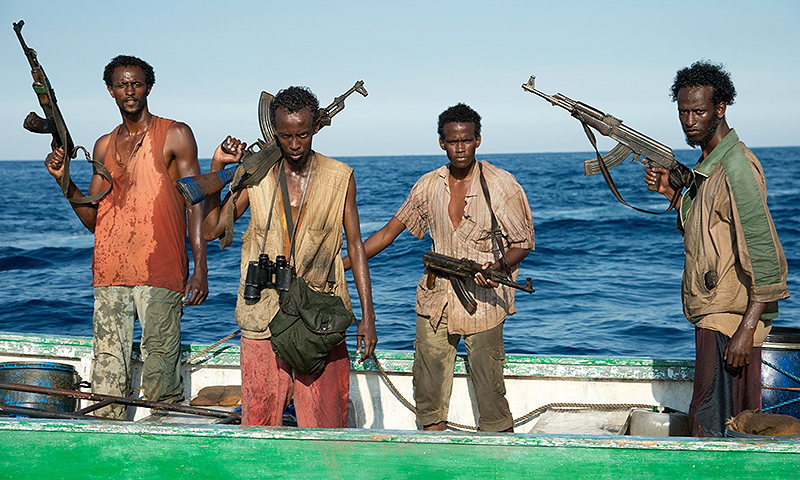
Protagonist - Tom Hanks as 'Captain Phillips'; the eponymous character.

Antagonist - The Somali pirates and their leader 'Abduwali Muse'.

Summation - Captain Philips is taken hostage by Somali pirates in an attempt to save his crew from a hijacking. The film reveals the distance between cultures and the limited options available to the Somalians. The film illicits an emotional and sympathetic response towards both the protagonist and the antagonists. The three pirates are assassinated, Muse (their leader) is captured and arrested and Captain Phillips is rescued which is the catharsis.

Protagonist Traits - 

  • Leadership skills
  • Strong in the face of adversity
  • Brave (volunteers to be taken hostage so that his crew are not involved)
  • Caring (saves his crew mates by volunteering to be taken hostage for ransom)
  • Places others before himself
Antagonist Traits -
  • Strong leader
  • Dominant
  • Driven to his lifestyle due to lack of options (civil war, corruption, unemployment)
  • Naive (believed it would be a simple hijacking without any casualties) 


Narrative Theory Analysis The Avengers, Breaking Bad and Shelock -

Narrative Theory - 

The Avengers - 

Antagonist: Loki (God of Mischief, Evil son of Odin)

Protagonists: The Avengers

Antagonist Traits:

  • Wants to dominate the world
  • Too proud
  • Misunderstood
  • Tragic backstory


Breaking Bad - 

Anti-hero: Walter White 

Anti-hero Traits:
  • Drug dealer (to earn money for his family before he dies)
  • Terminal lung cancer patient 


Sherlock Holmes - 

Protagonist: Sherlock Holmes

Foil: Dr John Watson

Protagonist Traits:
  • Impulsive
  • Eccentric
  • Egocentric
  • Chaotic
  • Genius/ intellectual
  • Adventurous
  • Obsessive
Foil Traits:
  • Mundane 
  • Level headed
  • Calm


Friday, 6 November 2015

Shot Composition and Analysis -

Shot Composition –
  • Wide
  • Full body
  • Mid
  • Medium close up
  • Close up
  • Extreme close up
  • Dutch angle
  • Low angle
  • High angle
  • Pan
  • Cut in
  • Over the head
  • Tilt
  • Dolly zoom
  • Over the shoulder
  • Medium two shot

The 180 degree rule - 
  • People in the scene must remain on their original side
  • If the side is switched then the movement of the camera to the second position must be shown
  • The audience must be re orientated at the end of the scene as they are a secondary participant

Hotel Babylon Analysis –
  • Medium close up : 0.05 – Shows the facial expression of the character who is worried and thoughtful. 
  • Panning shot : 0.08 – Follows the character walking across until he finds two police officers which could imply how sudden the visit is. 
  • Medium two shot / over the shoulder : 0.10 – Emphasises the status and power relationship between the characters. The police officers have power over the hotel staff. 
  • Zoom in shot : 0.17 – This shot infers that the police / immigration officers are closing in on the hotel by zooming in. 
  • Over the shoulder / long shot : 0.24 – This shot emphasises the sudden closing of the immigration officers and that they are cornering the hotel, it also makes the scene more dramatic. 
  • Panning shot : 0.35 - This shot again exaggerates the closing in of he immigration officers onto the hotel staff. 
  • Over the shoulder : 0.39 - This shot imitates being cornered due to the placement of the camera; this helps to give the audience an idea of how the characters are feeling within the scene. 
  • Close up : 0.49 - This shot is a close up on the immigration officers face which allows the audience to see his suspicious facial expressions. 
  • Close up shot transition to a mid shot : 0.52 - This shot exemplifies the erratic nature of the scene. 
  • High angle shot : 1.09 - The boss is at her desk and usually this shot implies vulnerability or lack or power but in the specific context of the scene it goes against this inference. However, it could imply her lack of power in ensuring all members of staff are not taken by the immigration officers.
  • Quick panning shots : 1.10 - These shots also show how the scene is erratic and the characters are desperate to alert the staff of the immigration officers presence. 
  • Panning shot : 1.14 - The panning shot following one character shows her desperation to hide the staff from the immigration officers. 
  • Close up : 1.27 - This shot is a close up on the door handle which shows the shaking hands of the character and thus highlights the desperation prevalent within the scene. 
  • Extreme Close up : 1.42 - The shot shows the worried facial expressions of the hotel staff and adds to the chaotic and fearful atmosphere of the scene. 
  • Slow panning shot : 1.46 - This shot pans slowly around the faces of all the worried hotel staff to exaggerate the tense and sad atmosphere of the scene. 
  • High angle shot : 2.10 - This shot shows a diabetic staff worker collapsed on the floor and the high angle shot exaggerates the vulnerability of the character in the specific scene.
  • Extreme close up & narrow depth of field / pull focus shot : 2.50 - This close up allows the audience to feel helpless as the hotel worker is unaware of the impending immigration officers who are in focus in the shot behind him; the depth of field is used well here to evoke helplessness in the audience. The staff member in the foreground is in focus until the immigration officers appear behind and the depth of field and focus is then pulled onto the background. 
  • Extreme close up : 3.07 - This extreme close up again highlights the vulnerability of the character as they are unconscious and in a low position on the floor. 
  • Zoom in shot : 3.23 - This shot is used to show the fear on the characters face as the audience hears a knock on the door of the room which the staff are hiding in. This again arouses tension and fear in the audience through choice of shot. 
  • Zoom shot : 4.26 - This shot zooms in and focuses on the belongings of the taken staff member and evokes a strong sense of sadness in the audience who are attached to the characters. 
  • Panning shot : 5.01 - This panning shot scans over the canteen tables in which the staff are separated into their ethnic groups. This shot is used to show the feeling of loss felt by a community and evokes a sense of sadness in an audience. 


 Over the Shoulder / Long Shot : 0.24
Over the Shoulder : 0.37

 Over the Shoulder : 0.39
 Extreme Close Up : 1.42
 High Angle Shot : 2.10
Extreme Close Up / Narrow Depth of Field :  2.50 


Tuesday, 13 October 2015

TV Period Drama Analysis Mise en Scene 'Downton Abbey' -

Downton Abbey - 

Mise en Scene 1 :

  • Set - 1912 England on the day the Titanic sunk
  • Location - Servants quarters
  • Actors - Famous actor Jim Carter  
  • Costume - Period, formal, maid and butler wear (Head butler in suit due to being in the presence of an opulent family)
  • Lighting - Dark to show it is in the servants quarters (lack of wealth)
  • Props - The iron used to iron the newspaper, the newspaper, the service bells (used to call servants to the aristocracy house owners)
  • Other - The meagre portions of porridge for breakfast


Mise en Scene 2 :
  • Set - 1912 England on the day the Titanic sunk
  • Location - The dining room, upstairs of the main house
  • Actors - Famous actor Hugh Bonneville 
  • Costume - Elaborate expensive fabrics and outfits, period
  • Lighting - Brighter as it is in the main house (shows wealth and opulence) 
  • Props - Telegram bringing the news of the death of friends
  • Hair and Makeup - 1920s finger waves
  • Other - The excessive banquet for breakfast


Class and Status :
  • "I understand most of the ladies were taken off in time…"
    "You mean the ladies in first class. God help the poor devils below decks… they're on their way to a better life"
  • The quote shows how the bourgeoise were treated with special privileges over the proletariat. Additionally, the above quote featured in the episode is an example of the perception held by the upper and middle classes about the working class.